I have struggled with periods and my menstrual cycle my entire life. Without knowing the effect it would have on my body and the potentially life-long consequences, I started on hormonal birth control at the young age of 13. Between the ages of 13-18, I didn’t have a period. When I was 19, I came off of birth control. And that’s when the pain really started. I started having my period over 95% of the time…. I would go months on end without ever having a break from bleeding.
With all of my other health issues happening simultaneously, I felt like there was no hope. Every time I would go to a gynecologist, they would run blood tests, all coming out inconclusive. They would eventually give me a DEPO shot, which would just stop the period for 3 months, and then it would come back even worse. I couldn’t keep food down, my anemia was off the charts terrible, and western medical doctors told me I was infertile. Imagine hearing you will never be able to carry children at the age of 19…
When I finally found my holistic doctor and went through extensive blood treatments, my period did come back. And it started to be “regular” again. Regular in the sense of when it happened each month, but definitely not normal. My periods were so painful that I couldn’t keep food down for the 2 days leading up to it and the first 2 days of it. My bleeding was so heavy that the giant clots would push tampons out. And the cramps were so bad I would miss work- only getting some relief from laying in the fetal position.
So I did what any determined person would do. I started researching. I started learning. I started with trial and error. Changing what I ate. Changing what I wore. Changing my daily habits. And after about 6 months of monitoring and constant changing, I had my first pain free period. I started bleeding without ever getting cramps. I not only had an appetite, but I could finally keep the food down.
And now I am determined to help other women fix their menstrual cycle. To learn that pain is not normal.
What to Avoid Leading Up to Your Period (I try to remove these all the 2 weeks leading up to the start of my period)
Alcohol
- Alcohol causes hormonal fluctuations and hormonal imbalances. Supporting your hormones during your menstrual cycle is crucial, and alcohol disrupts the natural production and secretion of your reproductive hormones.
- Alcohol is a diuretic. Staying hydrated is required to have a pain-free period, and alcohol causes dehydration.
- Alcohol disrupts restful sleep. As we all know, alcohol messes with your circadian rhythm and the effectiveness of your rest when sleeping. During your menstrual cycle, deep restful sleep is CRUCIAL.
- Alcohol increases inflammatory markers. Menstrual cramps are caused by uterine contractions triggered by prostaglandins—hormone-like chemicals involved in inflammation and pain signaling.
- Alcohol dilates blood vessels. This can lead to increased blood flow and potentially heavier menstrual bleeding for some women.
- Alcohol causes nutrient depletion. Alcohol consumption depletes essential nutrients like B vitamins and magnesium, which are crucial during menstruation.
Dairy
- Dairy products (especially in the United States) are filled with synthetic hormones. This includes progesterone and estrogen. This can massively impact your own body, as it works hard to build progesterone and get rid of excess estrogen.
- Dairy products can increase bloating and cramping.
- Increased inflammation. Dairy products, especially those containing A1 casein can trigger inflammation, increasing menstrual cramps.
I do believe removing dairy from my diet has been a total game-changer. Every holistic health book or functional medicine book I read recommended removing dairy from a women’s diet if they are struggling with painful or irregular periods.
Refined Sugars and Processed Foods
- Processed foods often contain added sugars, which can cause a rapid spike and crash in blood sugar levels, leading to mood swings, fatigue, and cravings.
- Processed foods are often high in sodium and unhealthy fats, which can lead to bloating and exacerbate mood swings.
- Processed foods and refined sugars increase inflammation, causing period cramps to be worse.
Caffeine
- Increased menstrual cramps. Caffeine can stimulate uterine contractions, which will increase menstrual cramps.
- Digestive issues. Hormonal fluctuations can impact digestion, which can cause bloating, constipation, or diarrhea.
- Breast tenderness and hormonal fluctuations. Caffeine can actually increase estrogen levels in the body, which can worsen breast tenderness and swelling, as well as cramps.
What Foods to Eat Before Your Period
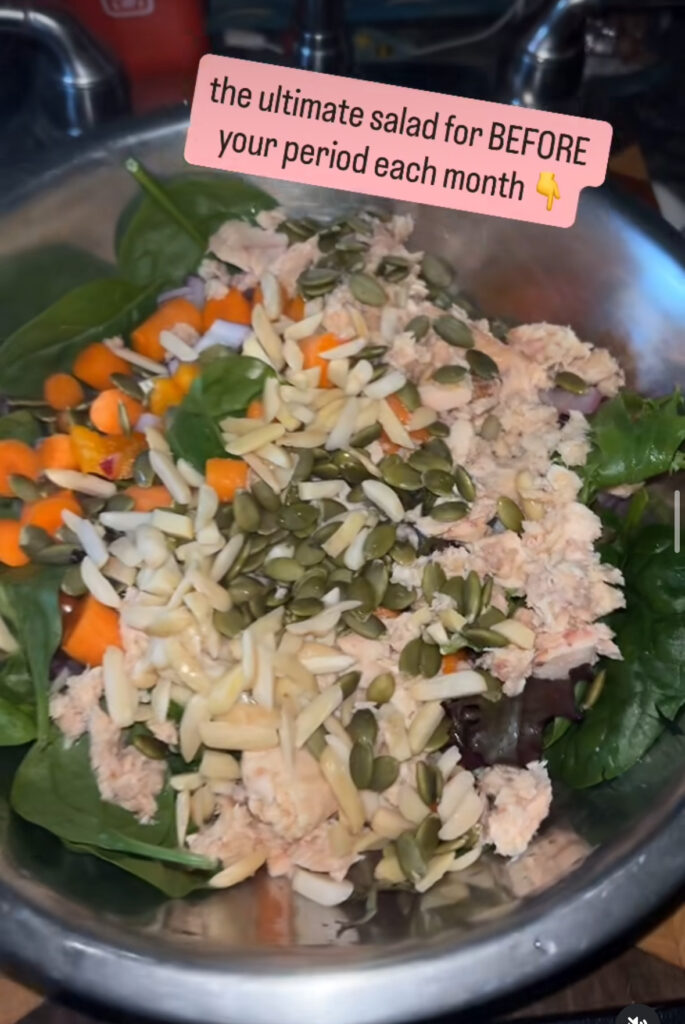
My Go-To Pre-Period Salad (as a pescatarian)
- Spinach, Kale, and Other Leafy Greens: These are rich in magnesium and iron.
- Sesame Seeds: The lignans help manage estrogen levels.
- Sunflower Seeds: High in Vitamin E, Vitamin B6, and zinc. These help support progesterone production.
- White Fish or Salmon: Rich in Omega 3 an Omega 6.
- Chickpeas: Rich in protein and iron. Also high in zinc which can help relax the uterus and reduce inflammation.
- Onion: High in fiber, Vitamin C, and quercetin. Onions are known to be an incredible anti-inflammatory.
- Garlic: Garlic is an anti-inflammatory and also high in antioxidants, which helps promote hormone regulation.
- Carrots, Broccoli, Cauliflower, and Other Cruciferous Vegetables: Cruciferous vegetables that are high in fiber can help clear the excess hormones you are releasing.
- Almonds: Rich in Omega 3, high in protein, high in fiber, and Vitamin E.
Homemade Salad Dressing:
- Olive Oil or Avocado Oil: Healthy fats that are high in Vitamin E are great for painful menstrual cycles. They are also essential for hormone production and can help stabilize blood sugar levels.
- GINGER: Ginger is known to be a strong anti-inflammatory. Ginger has been found to reduce period pain, bloating, and help reduce heavy flows.
- Natural Honey: Honey is a natural antioxidant and anti-inflammatory.
- Dijon Mustard: This is yummy and makes the dressing taste better.
- Turmeric: Turmeric is a strong anti-inflammatory that has been found to help with menstrual pain.
- Black Pepper: Combines with the turmeric to increase the health benefits.
Other Foods to Eat Before Period
- Vitamin B6 Foods: Foods that are high in Vitamin B6 support progesterone production and can help balance moods.
- Bananas, chickpeas, potatoes, avocados, tuna or salmon, green peas, sweet potatoes
- High-Fiber Foods: Increasing your fiber intake is crucial for a pain-free period. This can aid in digestion and help with estrogen detoxification, reducing bloating and irritability.
- Fruits, vegetables, and nuts are all great sources of foods with high levels of fiber
- Foods Rich in Iron: As you lose blood during your menstrual cycle, it is crucial to replenish your iron levels.
- Shellfish, spinach, legumes, red meat, pumpkin seeds, quinoa, broccoli
Increase Water Intake Before Your Period
- Hormonal balance. Staying hydrated maintains hormonal balance.
- Reduced pain. Proper hydration can help reduce menstrual pain and discomfort by relaxing muscles and reducing cramp intensity. Staying hydrated also aids in the detoxification process, reducing the risk of infections.
- Improved energy levels. Proper hydration boosts energy levels and overall well-being by supporting blood circulation and preventing headaches linked to dehydration.
- Nutrient absorption. Water is necessary for the absorption of essential nutrients, such as magnesium and calcium, which can help regulate mood and muscle health.
- Electrolyte balance. Staying hydrated is immportant for maintaining elecrolyte balance, which is crucial for muscle function and fluid regulation.
*If you want to experience ultimate hydration, drinking an alkalized, high pH, hydrogen water is key.
Check out Elevate Your Hydration to learn about the ultimate water machine that will change your life in multiple ways.
I encourage you to try integrating some of these additions and some of these removals before your next menstrual cycle. I would love to connect to hear what works for you and any other tips you have found that help you!